Summary
Fitzroy Residents Association (FRA) is an association of residents and friends of Fitzroy
who are committed to improving the liveability and sustainability of our suburb, city and
beyond. This submission nominates new initiatives we would like to see implemented in
the 2026-2027 budget year. Our submission is modest based on our understanding of
the financial constraints faced by the City of Yarra.
For 2026-27 we would like to see included in the City of Yarra budget:
1. Funding for a 20-year Fitzroy Town Hall precinct plan that restores a central
position to the Town Hall and the surrounding precinct in a way that builds
community and connections across Fitzroy.
2. Further implementation of the Brunswick Street Master Plan to enhance the
street and prepare for changing weather patterns.
3. Development of a ‘Green the City’ plan to increase canopy and build community
involvement.
4. Enhancing recognition and appreciation of our heritage precincts and their
importance to the community and the state.
5. Waste collection innovation that starts to realise Yarra’s commitment to circular
economy.
6. Update of the Yarra Housing Strategy to recognise new targets and how they can
be achieved while maintaining heritage and building community.
Further information on each of these initiatives is provided in the following pages.
1. Fitzroy Town Hall Precinct Masterplan
Fitzroy Town Hall is a magnificent building that we would like to see once again become
a centrepiece of our community. The idea for the masterplan is to examine both the
surrounding area of the building as well as utilisation of the building. The overall goal is
to maximise the role the building plays in our community as a place for meeting,
learning, entertaining and nourishing culture – a place where people of Fitzroy come
together. Fitzroy people come from diverse backgrounds; this site could not only
provide a place of physical interaction but of cultural interaction.
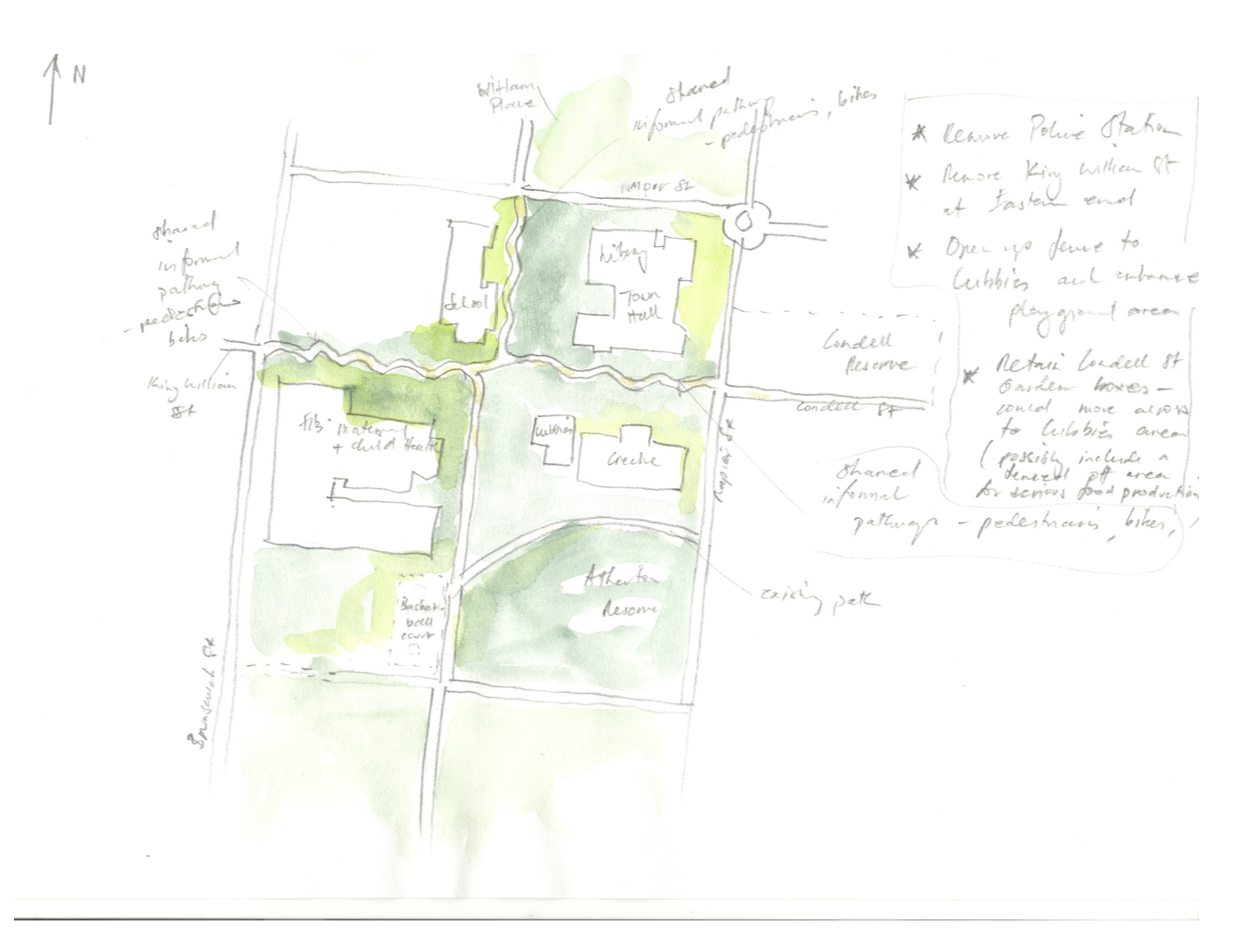
We would like to see the area around the town hall developed into a peoples’ plaza.
Condell Street Gardeners have already proposed closing Condell Street to provide a
space linking cubbies and the creche to the Town Hall. Thinking beyond this, the
precinct could link on a north-south axis to Gertrude Street through and Atherton
Gardens greenway. The Napier Street cycleway could also be incorporated into the
design. From West to East, Brunswick Street could be linked to Smith Street through
this area and Condell Reserve. Moore Street is the most sensible place for a cycleway
across Fitzroy. The forecourt of the Town Hall could be opened up with cars removed
from this street, plantings and sculptures that showcase local artists.
The police station has well passed its use-by date. It is uninhabitable as a place to work
and largely inaccessible for community. It is underutilised. Fitzroy police station should
eventually be moved to a more appropriate location such as Brunswick Street or similar.
This would free the area at the back of the town hall to be incorporated into a plaza that
surrounds the hall as a place for people and nature.
The inside of the Town Hall needs to learn from existing community cultural centres
such as the recently opened Balam Balam Place in Brunswick. Fitzroy Town Hall should
be its own unique place but it is worth looking at best practices. As a centre for Fitzroy, it
will eventually need a manager/curator. There have been suggestions for galleries and a
museum in the building. There is already one small gallery in the Town Hall and the
library is underneath. Others could be attracted. Perhaps Yarra Sculpture Gallery could
be moved into the Town Hall (freeing that site for housing). Artist studios and performing
groups may be attracted as tenants (hopefully these would reflect the wide range of
cultures in our suburb). Fitzroy Legal Service is already there. Fitzroy Learning Network
uses the building. Other community services that could be provided from the building.
FRA has already consulted Melbourne Design School. During a student workshop in the
area students identified this precinct as being worthy of development as a centre for our
suburb. They could be engaged in development of the masterplan.
All these matters would be up for discussion in development of the masterplan. We
expect it would be a 12-month process led by a person or people who had the respect of
the community and well supported with technical and research advice. The figure on
the next page illustrates the extent of the area under consideration.
2. Implementation of Brunswick Street Master Plan
While some elements of the 2020 Brunswick Street Strategy Master Plan have been
implemented – notably the corner of Brunswick and Gertrude streets and additional
street trees – there is much more that could be done. We need to see further progress in
2026-27 to enhance the strip and prepare it for changing weather patterns. This could
include:
a. Widen footpaths on the west side north from Moor Street to the same width
as the section south of Moor Street
b. Create more tree/street garden sections on street corners where possible (as
implemented in parts of Gertrude Street)
c. Upgrade and install new street furniture (particularly the area north of Moor
Street if this is widened) and additional street vegetation.
d. Implement to upgrade of the Condell Street section to create an integrated
green space, remove the car parking and plant more trees.
e. Upgrade existing lighting with LED and incorporate lighting for 30 Km signs.
f. Rejuvenate playground spaces in the Atherton Gardens precinct and improve
public accessibility by removing fences (as has been done in the Carlton high
rise apartment area).
3. Develop ‘Green the City’ Strategy and begin implementation
A “Green the City” strategy could include the following elements:
a. A “Green the Lanes” campaign, by encouraging communities to establish
creeper wall and fence cover as well as planting shrubs, grasses and
small trees.
b. Enable blue stones (or sections of asphalt) in lanes to be replaced with
small earth plots of native grasses, shrubs, small trees and creepers.
c. Remove asphalt from established street trees and replace with garden
ground cover.
d. Other incentives to residents and traders to manage/maintain external
green spaces in streets around trees – competitions, assistance for
community groups, reductions on rates, etc.
e. Investigate participation in programs such as Treeage
and Incanopy that seek to deepen community engagement with provision
and protection of tree canopy.
f. Resist replacing natural grass with artificial grass.
4. Enhance heritage recognition particularly for key sites and buildings
Heritage is under threat in Melbourne. New forces are seeking to destroy the fabric of
our suburb just as the state government did in the 1960s and early 1970s. We are not
saying everything should stay the same forever. We are saying that we need to identify
what is important and show that it is valued or we will lose it forever.
Elements of this would include:
1. An economic analysis of our heritage precincts that shows they are not only
valued by residents but that they create economic value for the state. Our
streets, cafes, restaurants and shops see a constant flow of tourists from other
parts of Melbourne, Victoria, interstate and overseas. They bring colour, life and
economic benefits evidenced by the steady rise in hotel beds in our
neighbourhood. They come to this heritage precinct just as tourists flock to the
‘altstadt’ areas of other international cities because of the intact historic
character. Nobody comes to Melbourne to go to a shopping mall that is the same
as you would find in any other city. In this materialistic world, we need to be able
to show this value. A number of projects have appeared internationally over
recent years that measure the value of historic precincts.
2. Subsidise plaques and other forms of recognition for historic buildings, sites and
precincts that explain both Indigenous and colonial connections – let’s tell the
story of our neighbourhood. There is considerable research on historic buildings
but this is all hidden in reports and obscure documents. Council can bring this
material into the public domain to enhance the experience of visitors and
residents while increasing interest in the importance of heritage sites.
5. Economic and process innovation to enhance circular economy
We were disappointed in the way council approached development of its waste strategy
however we still believe there are opportunities to do better. Current waste settings are
not working, waste is growing and costs are growing. General waste didn’t drop by the
same proportion as the increase in green waste following adoption of FOGO bins.
Recycling waste in particular is continuing to grow. We need to;
• Set targets for waste reduction (total and sub-totals for types of waste) and
publish results for all services quarterly.
• Create incentives for residents to reduce waste such as how we charge for waste
– the charge approach for kerbside service as per Good Practice Guidelines for
Service Rates and Charges should be implemented in the FY27 budget with
appropriate support for properties that require it. Review City of Melbourne and
Darebin charge settings as examples. Also review City of Yarra’s draft policy
document below.
• Create incentives or penalties for businesses to reduce packaging waste
• Charge for non-standard waste service usage across all 4 kerbside services –
City of Yarra is the only metro council to not have this policy setting – see Merri-
bek, Monash or other council websites. This should be implemented in the FY27
budget. See example photo below of property using significantly more than
standard service entitlement.
• A strong and ongoing waste education program including how to use FOGO,
opportunities for recycling and services available at the waste transfer station.
Recommence the alternate collection cycle trial with rebate for properties in the
trial areas. Review Merri-bek’s trial: Fortnightly rubbish trial | Conversations
Merri-bek.
• Reconsider compostable bags in sink-top bins for green waste to encourage
greater use of FOGO and divert waste to reuse opportunities
• Include opportunities for disposal of soft plastic in the education program
Ministerial Good Practice Guidelines for Service Rates and Charges.
City of Yarra Draft Waste Charge Policy 2017.
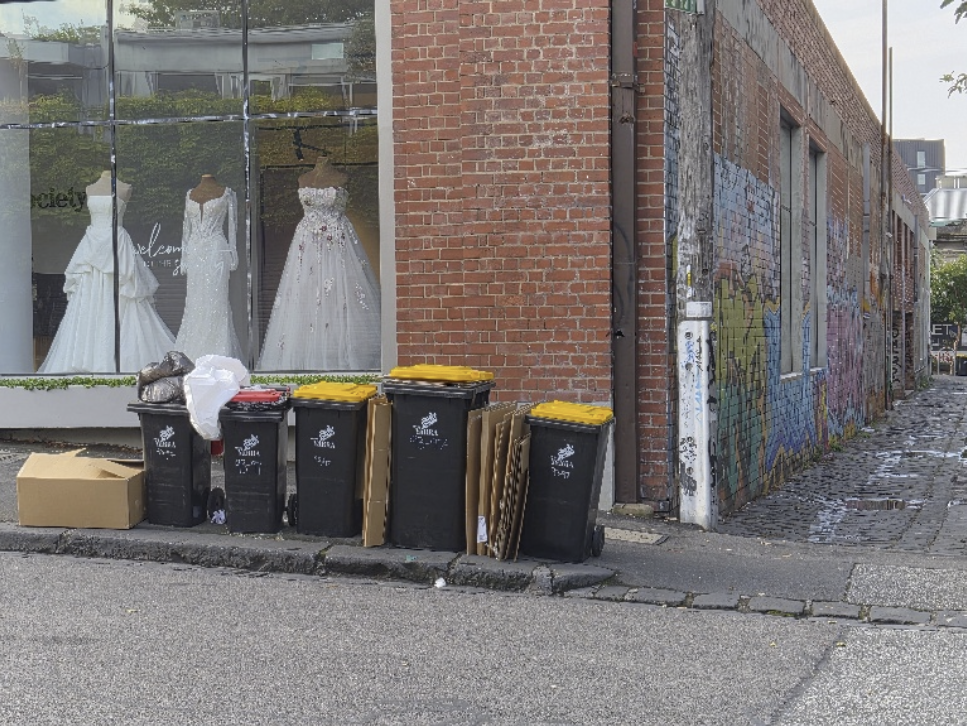
Example Non-Standard Bin Use - Webb Street
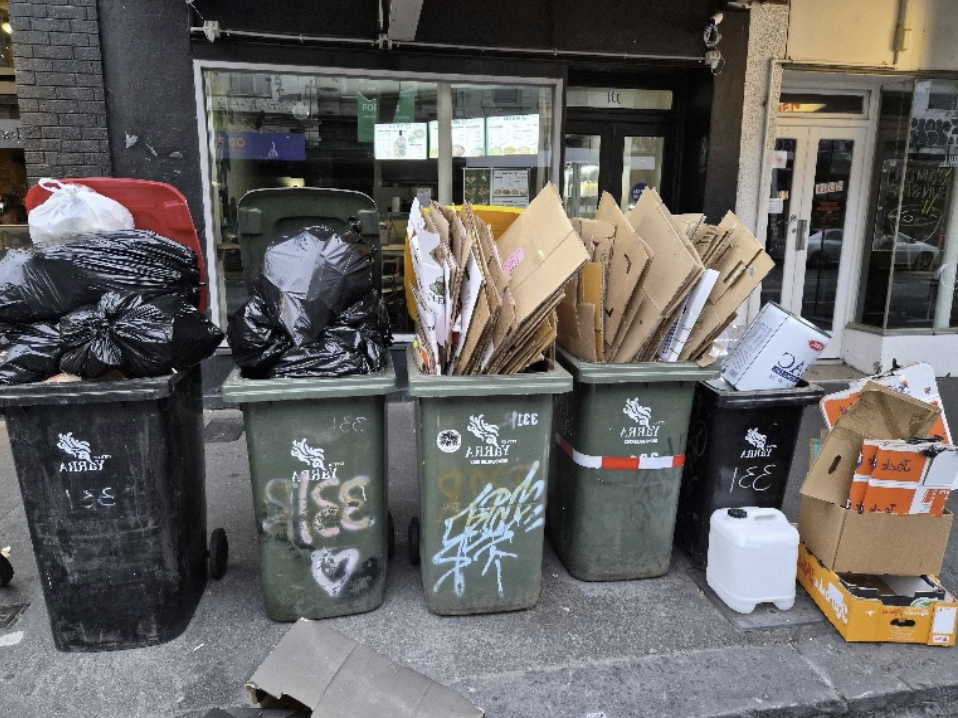
Example Non-Standard Bin Use - Smith Street
6. Update Yarra Housing Strategy
City of Yarra developed a sound housing strategy in 2018. Since then, there has been a
great deal of change in housing policy. We have had targets set, rules changed, council
decisions overruled and democratic processes removed. As a community, we accept
the need for greater housing density. We also feel strongly about maintaining the
diversity of our community. In light of all these changes, we believe it would be timely to
update the Yarra Housing Strategy.
The new strategy should send a clear message that we accept the need for greater
density and that we can accommodate the additional population government has
allocated in a way that maintains what is good and strengthens community. Our
housing strategy should not be a document based on numbers of housing units alone. It
should illustrate how density can be achieved in a way that builds and strengthens
community. In other words, that builds community connections, maintains the unique
historic precinct, creates more open space for people to find nature, exercise or relax.
It should also be a document that emphasizes a variety of housing types is required. To
quote the Committee for Sydney which has devoted two recent reports to the idea
of density done well, “we should be building more apartments that oher a similar
experience to a house, not the opposite”. As our own Government Architect has
recently said ‘Importantly, when we design to live closer to one another, we must
include the core attributes that people want in their homes – this is “amenity”. And
without amenity, we will simply build undesirable housing, no matter how short or tall
our buildings are’.
Perhaps the document could be the Yarra Housing and Community Strategy 2035 to
emphasise that housing alone does not represent a place to live or build community.